

Hereditary Angioedema
(HAE)

Hereditary Angioedema
(HAE)
About HAE
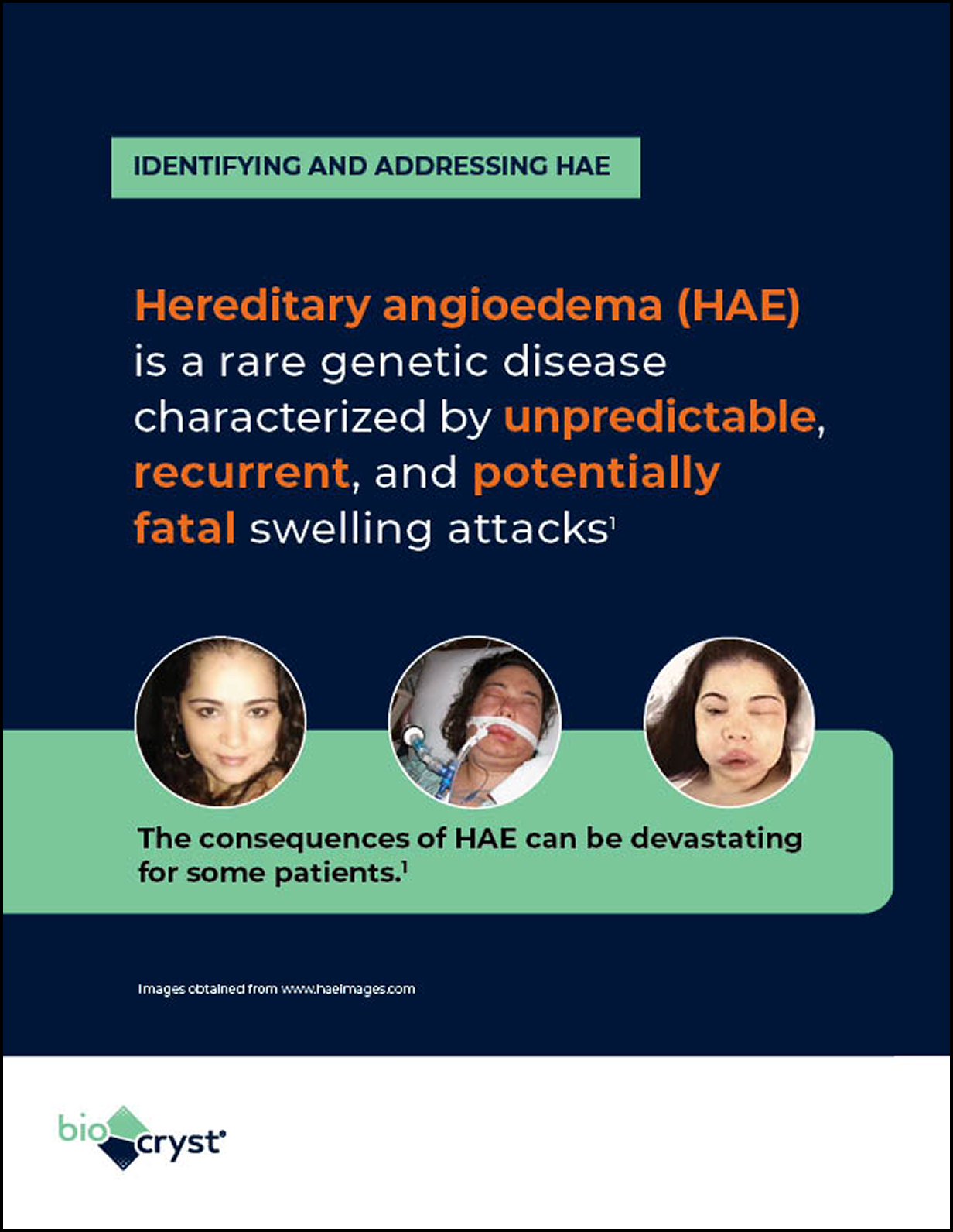
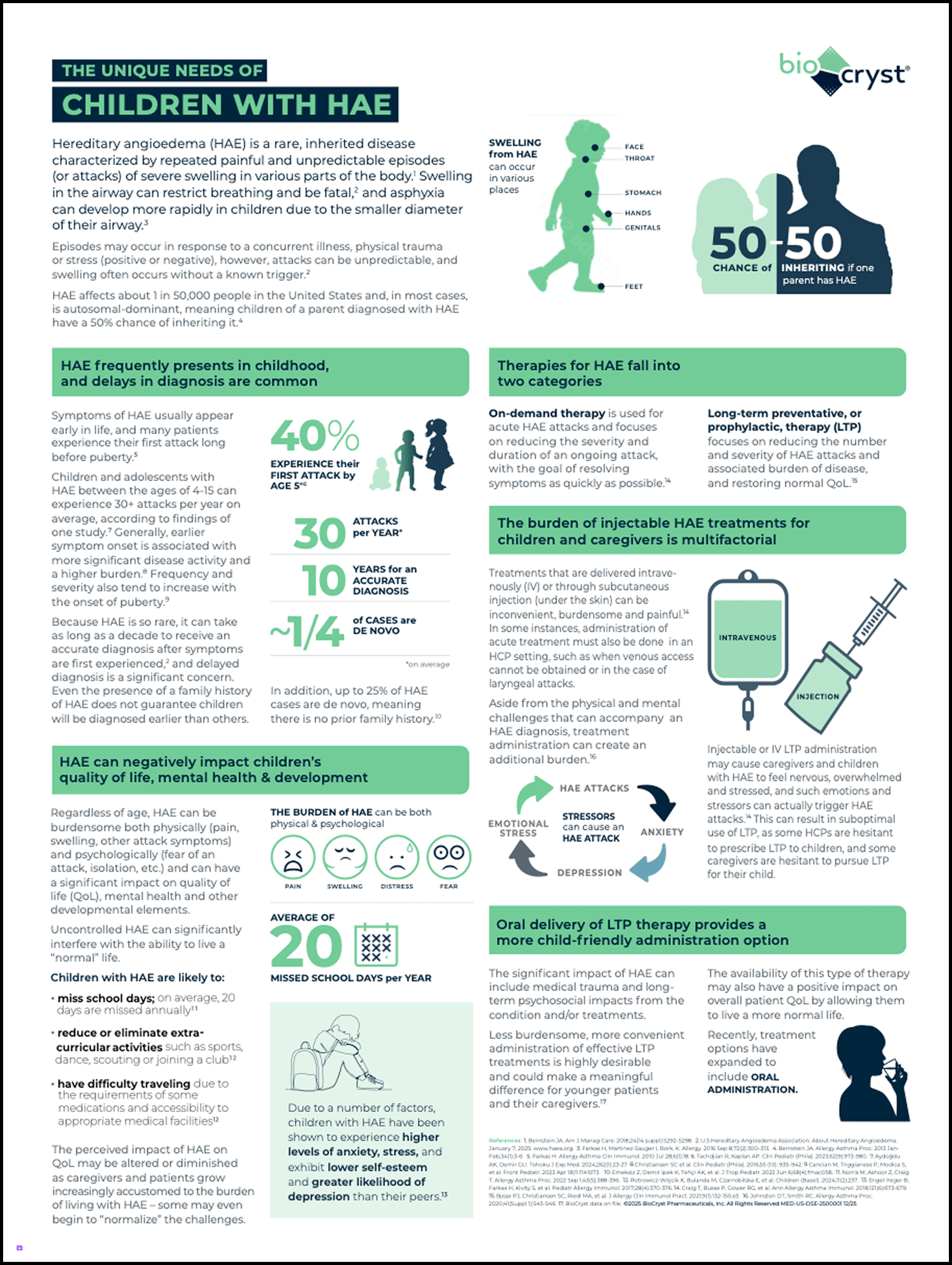
HAE is a potentially life-threatening rare disease caused by a genetic deficiency of a protein called C1 esterase inhibitor (C1-INH). C1-INH plays an important role in preventing the bradykinin-forming system from becoming hyperactive and mediating swelling in HAE. HAE is a rare condition, affecting between approximately 1 in 10,000 to 1 in 50,000 people.1 Left untreated, patients with HAE often have multiple attacks every month, and the swelling from each attack can last for 2 to 4 days.2




Medical educational grants & sponsorship requests
We are committed to advancing research, innovation, and training for healthcare professionals. As a vital part of the medical community, we at BioCryst accept proposals for medical education grants, sponsorship requests, charitable contributions and/or donations, and patient advocacy charitable contributions.
Current clinical trials and research
Browse current clinical research on HAE. Find detailed information on clinical studies, their goals, and how they are transforming care for patients.
A growing pipeline of small-molecule and protein therapeutics
BioCryst development programs represent the potential to improve the well-being of people whose lives are currently limited by HAE and other rare diseases. We discover novel, small-molecule, and protein therapeutics that treat diseases in which significant unmet medical needs exist.
References
1. Bernstein JA. HAE update: epidemiology and burden of disease. Allergy Asthma Proc. 2013;34(1):3-6. 2. Bernstein JA. Severity of hereditary angioedema, prevalence, and diagnostic considerations. Am J Manag Care. 2018;24(14 Suppl):S292-S298.